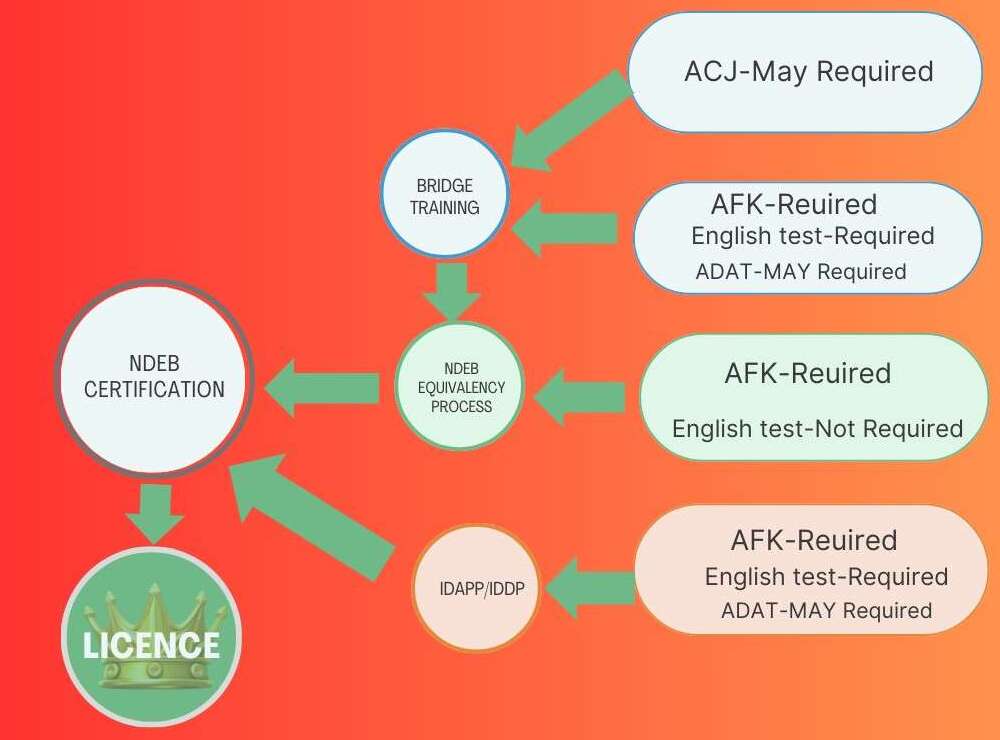
Preparing for the Assessment of Fundamental Knowledge (AFK) is an important milestone for internationally trained dentists pursuing the NDEB Equivalency Process in Canada. The examination covers extensive biomedical and applied clinical knowledge, making structured preparation essential.
A well-organized, active recall-based study plan for the AFK examination can help candidates improve knowledge retention, identify weaknesses, organize revision, and prepare effectively for examination-style questions.
This guide explains how to create an effective AFK study schedule, use active recall techniques, and organize subject-wise preparation. It also includes 12-week and 16-week study plans, a 30-day revision timetable, and practical strategies for MCQs and mock examinations.
Understanding the AFK Examination
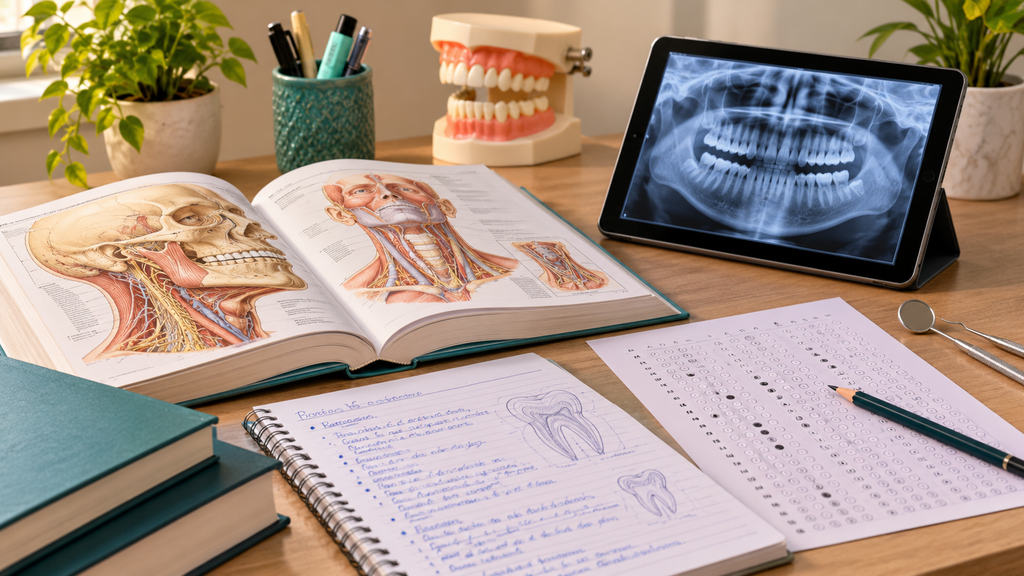
The Assessment of Fundamental Knowledge (AFK) is the first examination in the NDEB Equivalency Process for internationally trained dentists seeking dental licensure in Canada.
The examination assesses two major knowledge areas:
- Biomedical Sciences: Anatomy, physiology, biochemistry, microbiology, immunology, general pathology, and pharmacology.
- Applied Clinical Sciences: Operative dentistry, endodontics, periodontics, prosthodontics, oral surgery, pediatric dentistry, orthodontics, oral radiology, and dental materials.
AFK Examination Format
The AFK consists of 200 single-answer multiple-choice questions divided into two parts, with two hours allowed for each part.
| Examination detail | Information |
|---|---|
| Total questions | 200 |
| Questions per part | 100 |
| Time allowed | 2 hours per part |
| Question format | Single-answer MCQs |
| Passing standard | Test-equated, re-scaled score of 75 or higher |
| Maximum attempts | Three |
The passing score is not equivalent to answering exactly 75% of questions correctly. The NDEB uses a test-equating procedure to maintain a consistent passing standard.
Before starting preparation, review the official NDEB examination information and complete the available self-assessment to evaluate your knowledge.
How to Create an Effective AFK Study Schedule
An effective AFK study timetable should distribute subjects across manageable study periods while allowing enough time for practice and revision.
1. Start with a diagnostic assessment: Complete the NDEB self-assessment, review incorrect answers, and identify subjects requiring additional attention.
2. Divide the syllabus: Organize biomedical sciences and applied clinical sciences into weekly study blocks.
3. Practise active recall: Close your notes and explain concepts from memory. Use flashcards, blank diagrams, and comparison tables.
4. Include daily MCQs: Start with subject-specific questions and gradually introduce mixed-subject practice.
5. Track your progress: Maintain a study planner recording completed topics, incorrect answers, revision dates, and mock examination performance.
12-Week AFK Study Schedule
A 12-week AFK study schedule is suitable for candidates with a reasonable foundation in dental sciences who can maintain consistent preparation.
| Week | Subjects and preparation activities |
|---|---|
| 1 | Anatomy and physiology: Head and neck anatomy, cranial nerves, muscles, and major body systems. |
| 2 | Biochemistry, microbiology, and immunology: Metabolism, microorganisms, infection, and immune responses. |
| 3 | General pathology and pharmacology: Inflammation, healing, neoplasia, drug mechanisms, and adverse effects. |
| 4 | Operative and restorative dentistry: Dental caries, cavity preparation, and restorative materials. |
| 5 | Endodontics and dental materials: Pulpal diseases, diagnosis, root canal principles, and material properties. |
| 6 | Periodontics and oral pathology: Periodontal diseases, oral lesions, clinical features, and diagnosis. |
| 7 | Prosthodontics and oral surgery: Fixed and removable prostheses, extractions, and surgical complications. |
| 8 | Pediatric dentistry, orthodontics, and radiology: Primary dentition, malocclusion, and image interpretation. |
| 9 | Biomedical revision: Review all biomedical subjects and complete mixed MCQs. |
| 10 | Clinical revision: Revisit all applied clinical subjects and practise case-based questions. |
| 11 | Mock examination 1: Attempt 200 timed MCQs in two sessions and analyse mistakes. |
| 12 | Final revision and mock examination 2: Review weak topics, practise mixed questions, and prepare for examination day. |
Use active recall throughout all 12 weeks instead of postponing revision until the final stage.
16-Week AFK Study Timetable
A 16-week AFK study timetable is more suitable for candidates who need additional time to strengthen their knowledge and revise difficult concepts.
| Week | Subjects and preparation activities |
|---|---|
| 1 | General anatomy and head and neck anatomy. |
| 2 | Physiology and biochemistry. |
| 3 | Microbiology and immunology. |
| 4 | General pathology. |
| 5 | Pharmacology and biomedical practice questions. |
| 6 | Operative and restorative dentistry. |
| 7 | Endodontics and pulpal diseases. |
| 8 | Periodontics and periodontal diagnosis. |
| 9 | Prosthodontics and dental materials. |
| 10 | Oral surgery and local anaesthesia. |
| 11 | Pediatric dentistry, orthodontics, and oral radiology. |
| 12 | Comprehensive biomedical sciences revision. |
| 13 | Comprehensive applied clinical sciences revision. |
| 14 | First full-length mock examination and performance analysis. |
| 15 | Weak-area revision, mixed MCQs, and second mock examination. |
| 16 | Final revision, selected practice questions, and examination readiness. |
Which Study Plan Should You Choose?
The 12-week plan is appropriate for candidates with a stronger foundation and limited preparation time. The 16-week plan provides greater flexibility for learning difficult subjects, practising questions, and revisiting previously studied material.
Choose according to your existing knowledge and available study hours rather than selecting a shorter plan simply to finish sooner.
30-Day AFK Study Plan for Final Revision
A 30-day AFK study plan is useful for candidates who have already completed their initial syllabus preparation.
| Days | Revision focus |
|---|---|
| 1–5 | Anatomy, physiology, biochemistry, microbiology, and immunology. |
| 6–10 | General pathology and pharmacology. |
| 11–17 | Operative dentistry, endodontics, periodontics, and prosthodontics. |
| 18–21 | Oral surgery, pediatric dentistry, orthodontics, radiology, and dental materials. |
| 22–24 | Mixed-subject MCQs and error-log revision. |
| 25–27 | Timed full-length mock examinations. |
| 28–29 | Weak-area revision and flashcards. |
| 30 | Final review, examination arrangements, and rest. |
This schedule is intended for final consolidation, not complete preparation from the beginning.
Active Recall Techniques for Important Dental Subjects
Different dental subjects require different revision techniques.
Pharmacology: Create flashcards covering drug classifications, mechanisms of action, indications, contraindications, and adverse effects. Compare similar drug groups from memory.
Anatomy: Study labelled diagrams, hide the labels, and reproduce anatomical structures. Focus particularly on head and neck anatomy, cranial nerves, muscles, and anatomical spaces.
Oral Pathology: Compare conditions using clinical appearance, location, patient history, and distinguishing features. Practise identifying conditions from clinical descriptions and relevant images.
Periodontics: Connect periodontal disease processes with clinical findings, assessment, classification, and treatment principles.
Radiology: Practise identifying anatomical structures and interpreting radiographic findings. Compare normal appearances with common abnormalities.
Restorative Dentistry and Prosthodontics: Compare dental materials, their properties, indications, limitations, and clinical applications. Understand why particular treatment approaches are selected.
How to Practise AFK MCQs and Mock Examinations
MCQ practice should begin early rather than being reserved for the final weeks.
Start with topic-based questions after completing individual subjects. Once you have covered several areas, introduce mixed biomedical and clinical questions.
Follow these strategies:
- Read the question carefully before reviewing the options.
- Identify the main clinical or scientific concept.
- Eliminate clearly incorrect options.
- Select the most appropriate answer.
- Review incorrect and uncertain answers.
- Record recurring mistakes in an error log.
Full-length mock examinations should reproduce the AFK structure: 200 questions divided into two 100-question sessions, with two hours for each session.
Attempt at least two full-length practice examinations during your preparation. After each mock, evaluate performance by subject and prioritize areas requiring further revision.
Remember that practice scores cannot guarantee an official AFK result.
AFK Preparation for Working Dentists

Working dentists may have limited preparation time because of clinical duties and personal responsibilities. An effective AFK study timetable should therefore prioritize consistency.
Use shorter daily sessions for new concepts, flashcards, and MCQs. Reserve weekends for cumulative revision and longer practice examinations. Prioritize difficult subjects when you have sufficient time and energy, and avoid unrealistic daily targets. For a more detailed working-professional routine follow our working dentist special guide for proper plan.
Common AFK Study Planning Mistakes to Avoid
Avoid these common preparation mistakes:
- Spending excessive time on one subject while neglecting others.
- Delaying MCQ practice until the final weeks.
- Memorizing information without understanding clinical applications.
- Ignoring incorrect answers and recurring weaknesses.
- Creating an unrealistic daily timetable.
- Neglecting cumulative revision and spaced repetition.
Use a progress tracker to identify problems early and adjust your preparation accordingly.
Tools and Resources for AFK Preparation
Digital planners can help organize weekly goals, completed subjects, and revision dates. Flashcards and spaced-repetition applications support regular knowledge retrieval, while reliable question banks provide opportunities to practise examination-style questions.
Always prioritize official NDEB information for examination requirements and preparation guidance.
Useful resources include:
How DentalHeight Academy Can Support Your AFK Preparation
Preparing for the AFK requires a clear learning strategy, regular assessment, and consistent revision. DentalHeight Academy aims to support candidates through structured academic guidance, clarification of difficult concepts, study planning, and practice-question review.
Candidates should evaluate available preparation support according to their learning needs, examination timeline, and existing knowledge.
FAQs About AFK Study Planning
1. How many months should I prepare for the AFK?
A 12-week or 16-week schedule can provide a useful preparation structure. Your actual timeline depends on existing knowledge, study availability, and subject difficulty.
2. Is active recall better than reading textbooks?
Both methods are useful. Reading develops understanding, while active recall tests whether you can retrieve information independently. Combining them is more effective than relying on either alone.
3. How many MCQs should I practise daily?
There is no official daily MCQ requirement. Begin with manageable topic-based practice and increase the number as your understanding improves.
4. Should I study biomedical and clinical sciences separately?
You can initially study them in separate blocks, but practise connecting related concepts through mixed questions and clinical scenarios.
5. How often should I revise a topic?
A practical starting point is same-day revision, followed by reviews after one day, three days, one week, and two weeks. Adjust according to your recall ability.
6. Does a high mock score guarantee an AFK pass?
No. Mock scores help evaluate preparation but cannot guarantee an official result because the NDEB uses test-equated, re-scaled scoring.
7. Is a 30-day AFK study plan enough?
It can be useful for final revision if you have already completed the syllabus. Candidates starting from the beginning generally need a longer preparation period.
Conclusion: Prepare with a Realistic AFK Study Schedule
Successful AFK preparation requires more than covering textbooks and memorizing dental concepts. Candidates need a balanced routine that combines subject-wise learning, active recall, MCQ practice, and cumulative revision.
Choose a realistic 12-week or 16-week AFK study schedule according to your knowledge level and available time. Use mock examinations to evaluate progress, revisit difficult concepts, and improve time management.
With consistent preparation and purposeful revision, candidates can approach the AFK examination with better subject understanding and greater confidence.